Set Design
Designing oppression: timber, iron, and claustrophobia
Build the space in Full Design
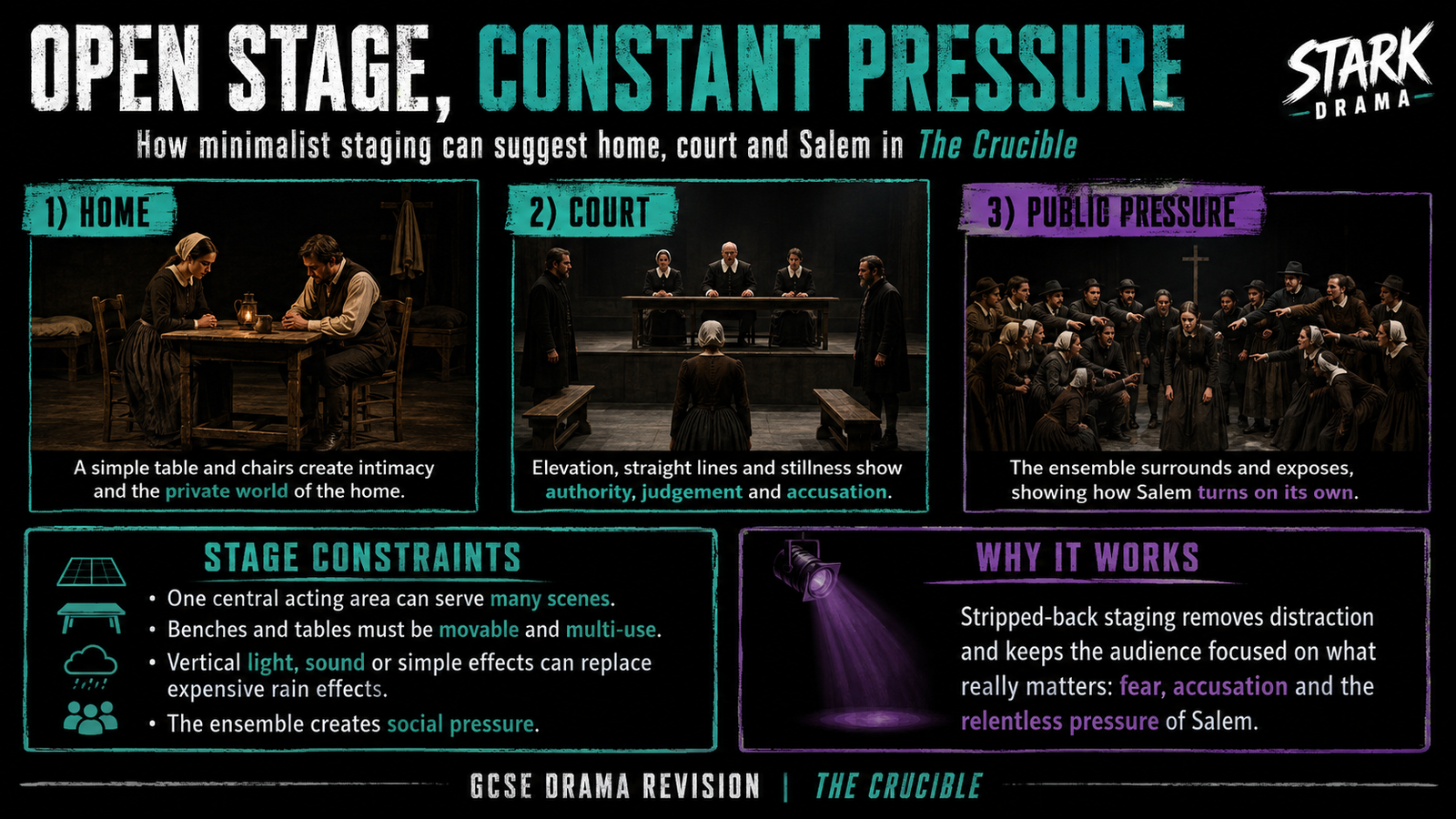
Start from Parris’s room, the Proctor farmhouse, the court or the jail, then move furniture and compare how different stage configurations change sightlines and pressure.
Set concept at a glance
Stage Space Simulator
1. The Proctor Farmhouse (Act 2)
Design focus: The ceiling beams should hang deliberately low to create claustrophobia. Sparse furniture and rough-hewn timber suggest hard labour and a joyless theocracy. This lets the audience feel how private guilt is amplified by a society designed to suffocate.
Exam Terminology Bank
Unit Set
A single, persistent structure used across locations. In The Crucible, it can trap characters in the same “wooden cage” while furniture shifts signal house/court/jail.
Rostrum / Levels
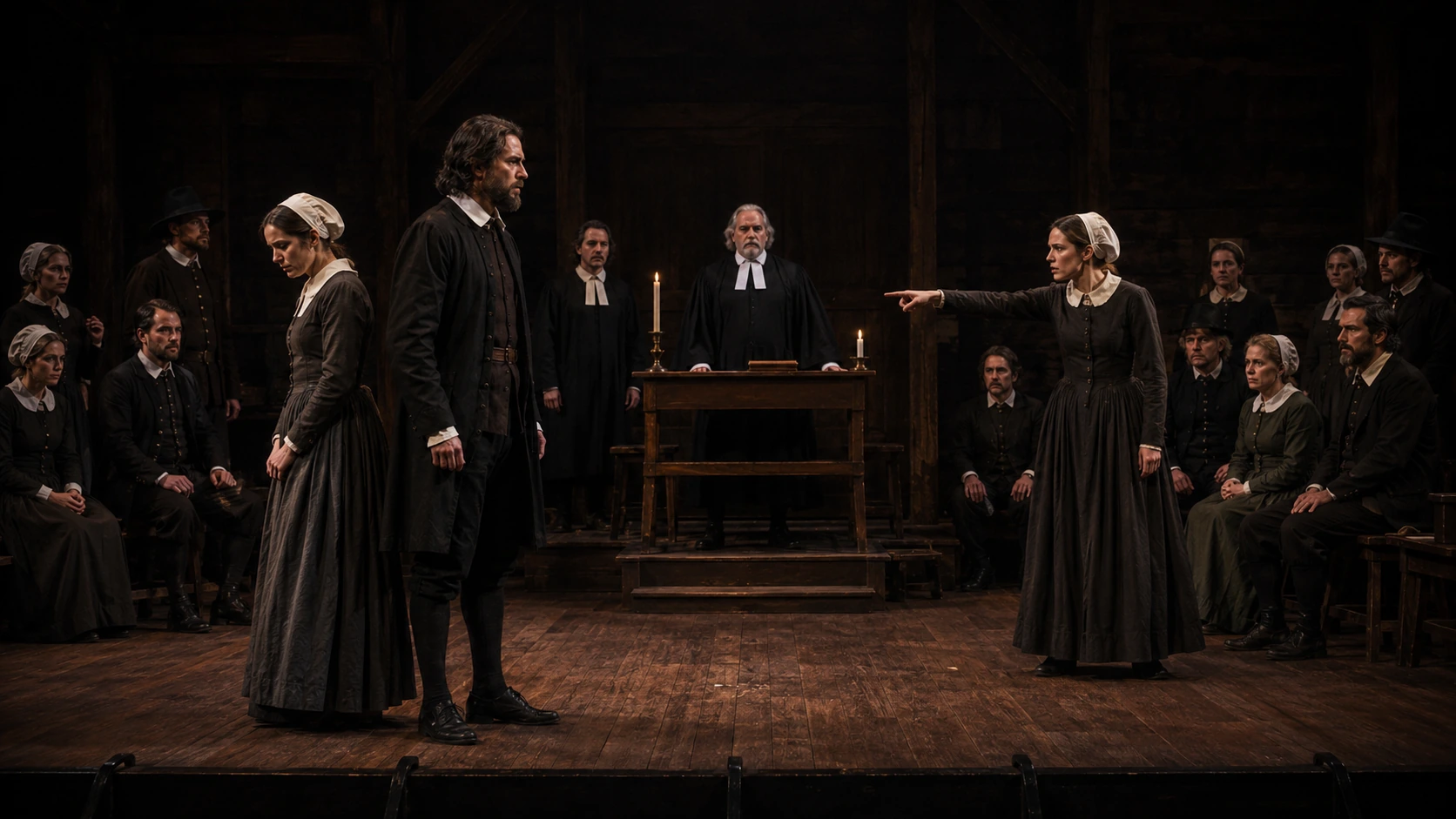
Raised platforms that create visible status. In Act 3, Danforth elevated forces the accused to look up — architecture becomes intimidation.
Sightlines
What the audience can (and cannot) see. Bars or framing can restrict sightlines so the audience feels imprisoned with Proctor in Act 4.
Rough-Hewn Texture
Unpolished, axe-cut timber. It signals frontier harshness and the “unfinished” brutality of Salem’s morality.
📝 Exam Builder: Set design paragraphs
Board-aware model paragraphs that connect set choices → meaning → audience effect.
Synopsis & Journeys
From whispered rumours to the gallows.
Context & History
1692 Salem, Puritanism, McCarthy allegory.
Characters & Acting
Status, control, and ensemble hysteria.
Key Scenes & Proxemics
Forest / farmhouse / courtroom / jail staging.
Themes & Quotes
Reputation, fear, authority — performance-led.
Design Elements
Set / lighting / sound / costume.