Sound Design
Live Foley, Body Percussion, and Silence
Possible interpretation: live ensemble sound
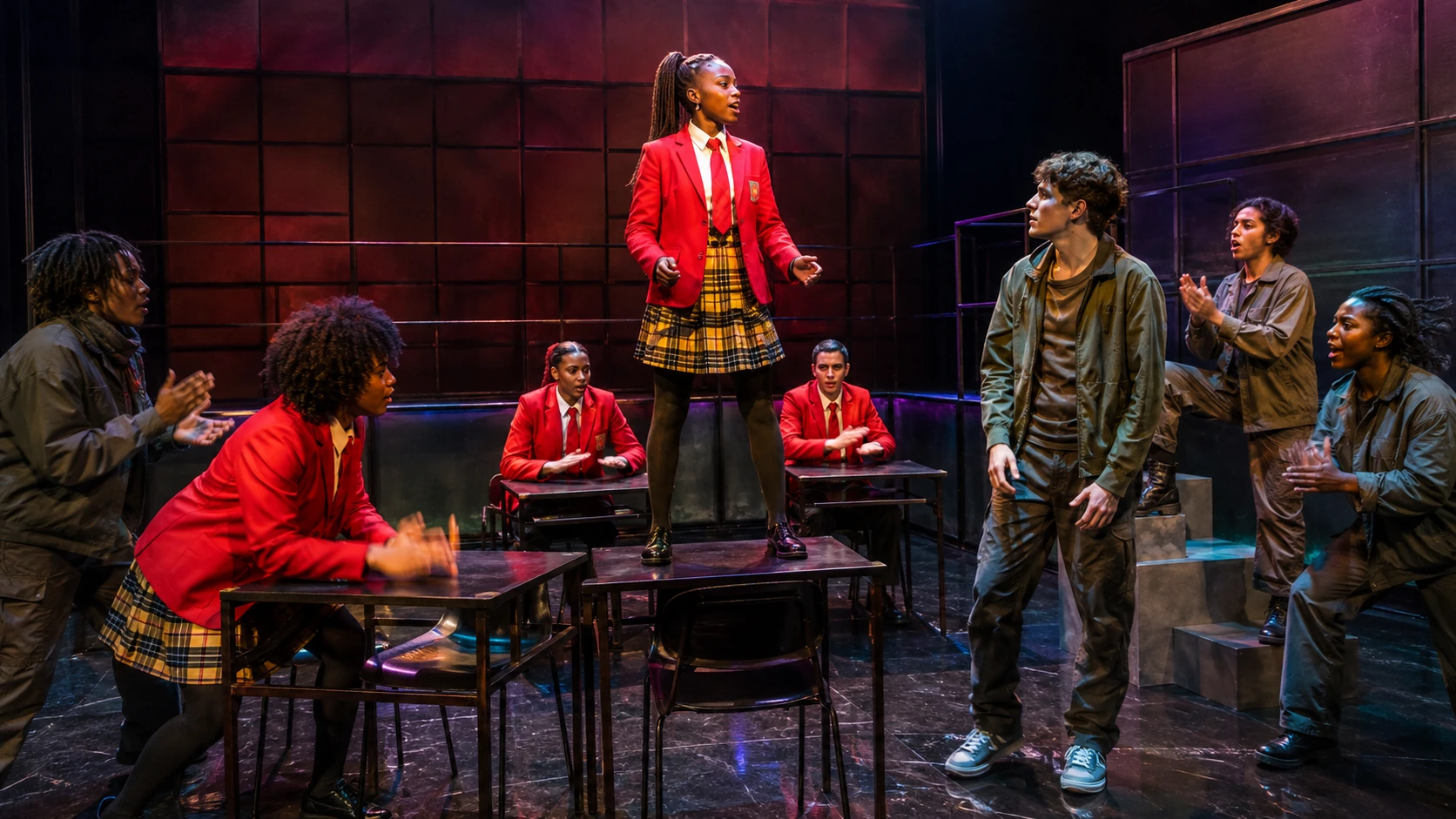
One story-theatre interpretation is to create sound live with ensemble voices, bodies and stage objects. Recorded sound is not forbidden; the important question is how the choice supports the text and audience response.
Ready · Original Stark Drama demonstration audio. It is not taken from a professional production or published score. No autoplay.
Concept 1: The Heathcroft Stomp
The Big Idea: During the Heathcroft protests, live ensemble sound could make the threat feel physically present, while a recorded alternative could create a different effect.
📝 AQA Terminology Bank
Body Percussion
Using the human body to create percussive sound (for example stomping, clapping or striking the thighs). Repeated unison rhythm can create collective pressure or threat when that suits the scene.
Live Foley / Object Manipulation
Actors creating sound effects visibly on stage using props. For example, slamming a wooden crate onto the stage floor to simulate a gunshot or explosion.
Vocal Soundscape
The ensemble layering their voices (hissing, whispering, chanting) to create an atmospheric bed of sound, representing the hostile society surrounding Callum and Sephy.
📝 Exam Strategy: The Design Grid
Use this structure to make a precise, justified response: choice ➔ dramatic reason ➔ audience effect ➔ terminology.
| Sound Choice (What) | Impact Justification (Why) | Key Terminology |
|---|---|---|
| Click 'Generate Example' to see a strong answer... |