Lighting
Use light to control visibility, judgement and emotional pressure.
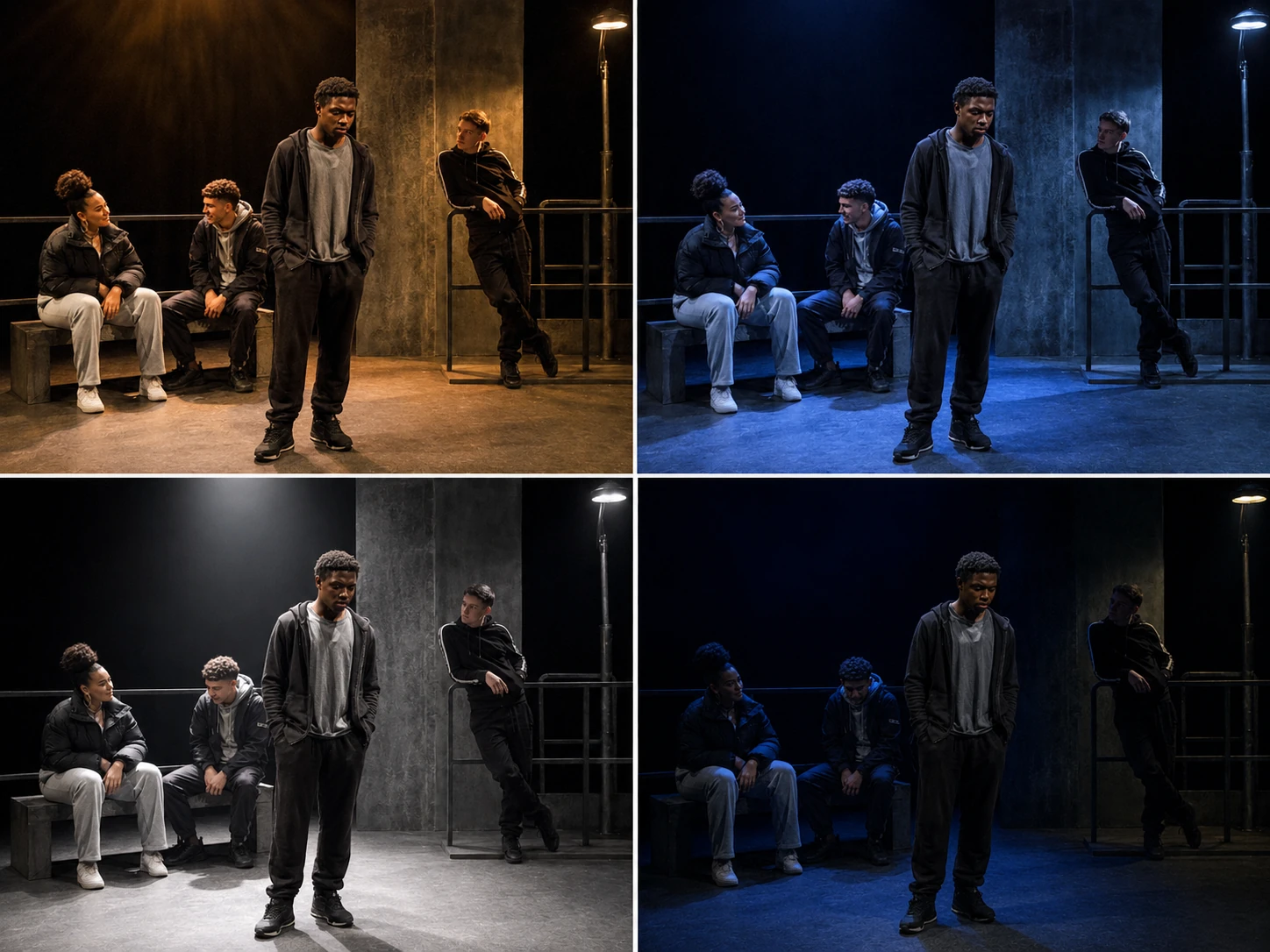
Lighting prompt: which state makes Martin look most exposed rather than simply sad, and why?
Public versus private
Harsh, exposed lighting can make public scenes feel judgemental. Softer or narrower states can create more intimate spaces where Martin is seen differently.
The face as focus
Because appearance is central, lighting can deliberately frame the audience’s gaze. Side-lighting, isolation or reflective surfaces may emphasise how Martin feels watched.
Transitions
Quick changes in colour temperature or intensity can distinguish hospital, street and memory-like moments without interrupting the flow.
Answer tip
Name the lantern effect or angle where possible, then link it to audience response: colder white side-light, amber street wash, or a narrow spot that isolates Martin from the ensemble.